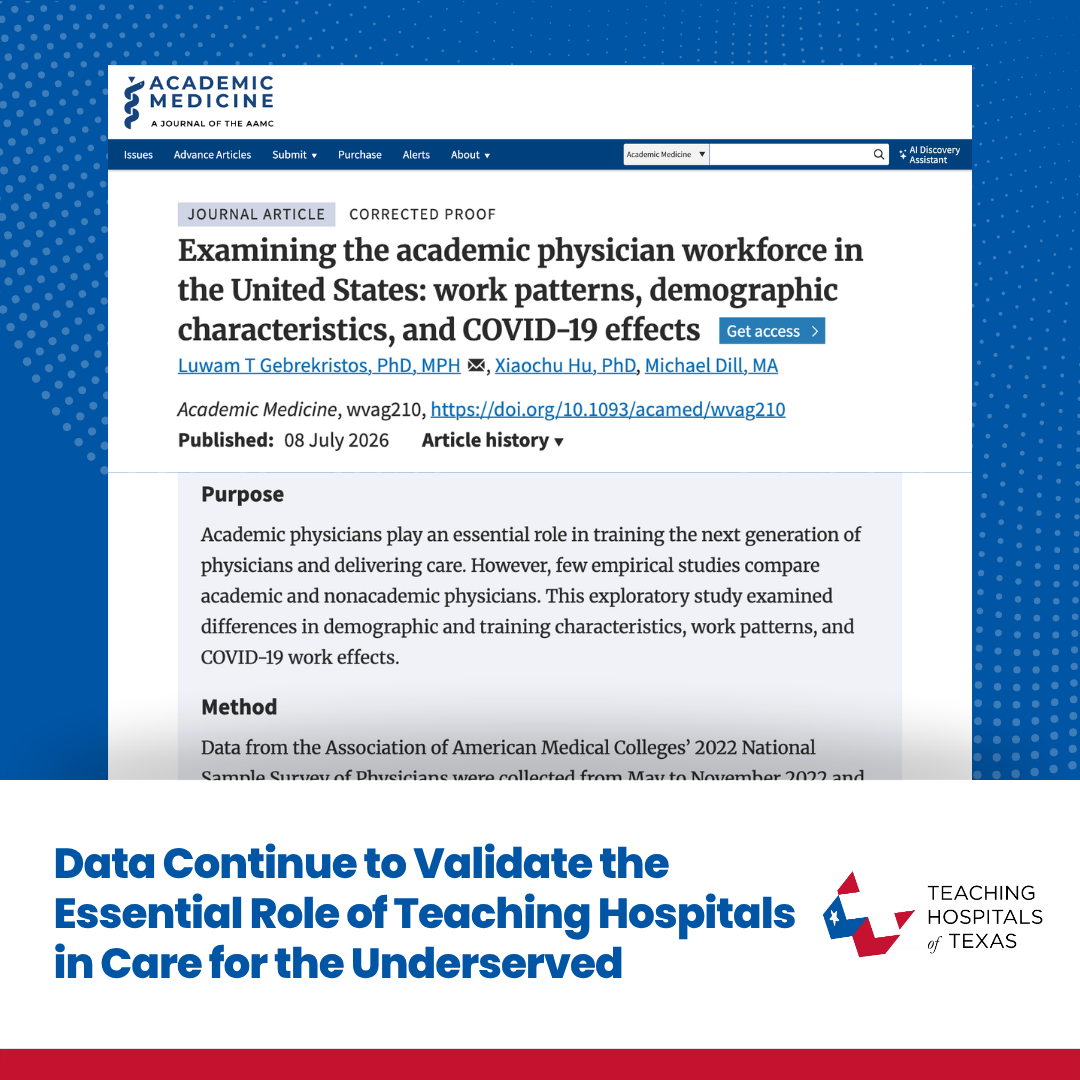
New data from the Association of American Medical Colleges provide further evidence of the essential role that teaching hospitals play in providing care for the underserved. The new data, published in the journal Academic Medicine, reveal that academically affiliated physicians care for a higher proportion of patients with Medicaid coverage and had a practice zip code with associated higher unmet needs scores than their non-academically affiliated peers. The data highlight the “contribution of academic physicians in serving underserved and vulnerable populations,” according to the authors.
These data align with Teaching Hospitals of Texas’ hospital-level data showing that while comprising just 4 percent of the hospitals in the state, THOT members provide a disproportionate amount of care for the uninsured and publicly insured. THOT member hospitals account for:
- 18 percent of all hospitals’ Medicaid inpatient days
- 40 percent of all hospital-provided, unfunded charity care
In addition, nearly 90 percent of THOT-members’ outpatient clinics are in neighborhoods with access to care challenges, such as income, lack of insurance, health status, or transportation. Most are in neighborhoods with multiple obstacles to accessing needed care. Teaching and public hospitals invest in these neighborhood clinics intentionally as part of their long-term strategy and commitment to increase access, reduce costs, and improve care.
“Teaching hospitals are essential so Texas has the future physicians, nurses, and other clinical professionals it needs for a growing population, but the data continue to demonstrate that they are also equally vital to providing high-quality, accessible care for traditionally underserved populations,” said Maureen Milligan, PhD, president and CEO, Teaching Hospitals of Texas.
“[G]iven academic physicians reported greater involvement in serving…areas with higher unmet health care needs and Medicaid populations, policies aimed at ensuring access to care for vulnerable populations should recognize the critical role academic physicians play in health care delivery,” wrote the report’s authors.